Steel structures
Steel Structures
Steel structures are building structures for steel halls, where the main load-bearing system consists of steel elements. The structure can be of many types, such as arched, truss, or frame. Typical uses of steel structures include steel frameworks for production or storage halls, administrative buildings, as well as typical steel constructions such as steel bridge structures, various towers, transmitters, power line masts, or lookout towers.
Steel structures typically consist of columns, beams, crossbars, or trusses. The individual parts are welded and then assembled on site using bolts of various sizes and strengths; in certain cases, the structure must also be welded on site.
We are able to manufacture and deliver top-quality steel structures and other materials for the realization of your projects. You can also rely on our steel prefabricated halls.
Quality Steel Structures
Rely not only on quality steel structures that will support the successful realization of your project, but also on coatings or sandwich panels.
Steel structures are often clad with sandwich panels, which are attached horizontally directly to the load-bearing columns, or vertically to auxiliary steel purlins. Sandwich panels are the best element for insulated cladding of production halls and warehouses, sales halls, industrial centers, agricultural halls, and car showrooms.
Advantages of steel structures:
- The advantage of steel structures is their homogeneity and the possibility of shaping while maintaining high manufacturing precision.
- Another advantage of steel structures is their 100% recyclability.
- The greatest advantage is easy assembly and the associated speed of construction with minimal technological interruptions.
Disadvantages of steel structures:
- A disadvantage of steel structures in certain cases is their instability in smaller profiles, which must be stabilized, especially thin-walled profiles in purlins or joists.
- Another disadvantage is that although steel is non-combustible, at temperatures around 500 °C its mechanical properties deteriorate rapidly and the stability of the structure can be quickly compromised.
- A major problem of steel structures is corrosion when exposed to weather conditions.
We are able to evaluate all the advantages and disadvantages of steel structures. For the advantages, our structural engineer will use steel to achieve the highest possible efficiency, and for the disadvantages, our designer will propose measures so that the disadvantage does not affect the functionality of the prefabricated hall or other steel structure.
Preparation and Welding of Frame Steel Structures
The preparation of steel structures is governed by the standard ČSN ISO 8501-1; most often, we prepare the structure according to this standard, which includes:
- St 2 – thorough manual and mechanical cleaning
- Sa2 – thorough blasting
The actual welding is carried out using arc welding techniques by the MIG/MAG 135 method, also known as welding in a protective atmosphere, in various welding positions. For welding sources, we use water-cooled types aXe 400 IN COMPACT H2O or aXe 500 IN COMPACT H2O. The filler material used for welding is G3Si1 1mm wire wound on a spool (most often weighing 15 kg). The wire is unwound by a so-called wire feeder and, via a two-roller or four-roller drive, is fed through a multifunction cable to the MIG/MAG torch. The weld pool is protected from atmospheric oxidation by a stream of inert gas (Ar, Ar+He) or active gas (CO2, Ar+CO2, Ar+O2), which flows to the weld area from the torch’s gas nozzle. Between the welding source and the gas cylinder (or gas distribution system), a pressure regulator must be installed to adjust the gas flow.
Welding is performed manually or with the help of a welding tractor for larger frame structures. Welding tractors are a very practical tool for welding long longitudinal and arched welds.
Fire Resistance
Paradoxically, the fire resistance of steel structures is lower than that of reinforced concrete structures. Structural steel falls into category A1 (least flammable materials), but under the influence of high temperatures, its physical and technical parameters decrease, especially the load-bearing capacity and stability of the steel structure, which can subsequently lead to the collapse of the prefabricated hall or steel structure.
Fire resistance of steel structures can be increased by:
- Providing a sufficient reserve in the static calculation, which increases the load-bearing capacity of the profiles in case of fire, ideally up to a fire resistance of 30 minutes (R30)
- Surface treatment such as fire-resistant spray or coating directly on site
- Cladding the structures with plasterboard or cladding called Ordexal
Overview of steel structure types:
- Steel structure halls
- Frame steel structures
- Truss steel structures
- Arched steel structures
- Steel terrace structures
- Steel structure production
- Steel staircase structures
Contact Us
PROMO HALY s.r.o. has completed a number of successful projects. Take a look at our news and see for yourself. We offer you quality steel structures and a range of other building elements. Contact us too – we look forward to working with you.


References of steel halls
 Administrative Glass Hall X Shift Chropyně
Investor: X Shift Gearboxes s. r. o.
Place of implementation: Chropyně
Hall type: Administrative
Dimensions: 12 × 17 × 7 m
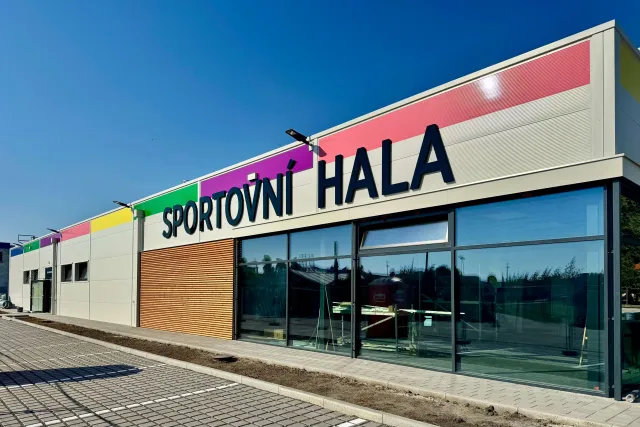 Sports Hall Chropyně
Investor: Sport Construction
Place of implementation: Chropyně
Hall type: Sports
Dimensions: 44 × 44 × 10 m
 Athletic Tunnel TJ Spartak Třebíč
Investor: TJ Spartak Třebíč
Place of implementation: Třebíč
Hall type: Sports
Dimensions: 15 × 114 × 9 m
 Administrative and Sales Hall FOXEL Elektro Ostrava
Investor: FOXEL Elektro s. r. o.
Place of implementation: Ostrava
Hall type: Administrative, retail
Dimensions: 25 × 35 × 8 m
 Danny Cars Březnice Car Showroom
Investor: Danny Cars s. r. o.
Place of implementation: Březnice u Zlína
Hall type: Retail
Dimensions: 15 × 30 × 4 m
 Administrative Sales Hall Přerov
Investor: PSS přerovská stavební a. s.
Place of implementation: Přerov
Hall type: Administrative, retail
Dimensions: 10 × 30 × 5 m
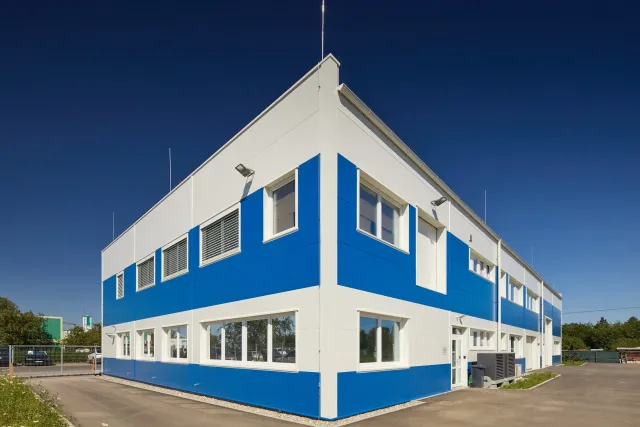 Production Hall 22 ALTECH Uherské Hradiště
Investor: ALTECH, spol. s r.o.
Place of implementation: Uherské Hradiště
Hall type: Manufacturing
Dimensions: 20 × 40 × 9 m
 Agricultural Machinery Service Hall Hůry
Investor: Jiří Borovka
Place of implementation: Hůry u Českých Budějovic
Hall type: Car showroom or service
Dimensions: 15 × 30 × 5 m
 Service and Sales Hall of Agricultural Machinery Borovka Hůry
Investor: Jiří Borovka
Place of implementation: Hůry u Českých Budějovic
Hall type: Car showroom or service, retail
Dimensions: 16 × 36 × 7 m
 Service hall for buses and trucks ČSAD Přerov
Investor: ČSAD Ostrava a. s.
Place of implementation: Přerov
Hall type: Car showroom or service
Dimensions: 22 × 24 × 8 m
 Administrative Sales Hall Stilparkett Přerov
Investor: Stilparkett s. r. o.
Place of implementation: Přerov
Hall type: Retail
Dimensions: 12 × 22 × 7 m

Investor: Růžička promotion s. r. o.
Place of implementation: Malesice u Plzně
Hall type: Warehouse, administrative
Dimensions: 12 × 56 × 6 m
Steel Hall Prices
A PROMO 1800 type hall – dimensions 30 × 60 m, height 9 m at the parapet (1800 m2 or 14,400 m3) is designed for maximum use of storage space. The price corresponds to the visualization.
A PROMO 1650 hall – dimensions 30 × 55 m, height 7.8 m at the parapet (1650 m2 or 11,500 m3) – is designed for maximum use of storage space. The price corresponds to the visualization.
A PROMO 1242 type hall – dimensions 25 × 35 m, height 7.7 m (1,242 m2 or 3,726 m3) – is designed for maximum utilization of the hall space and according to the investor’s requirements. The price corresponds to the visualization.
A PROMO 1080 type hall – dimensions 20 × 54 m, height 4.77 m (1080 m2 or 5000 m3) is an excellent size for a prefabricated warehouse hall for business, ideal for shelving. The price corresponds to the visualization.
PROMO 864 type hall – dimensions 18 × 48 m, height 5.5 and 7.7 m (854 m2 or 5,227 m3) is the basic size for administrative and production halls. The price corresponds to the visualization.
PROMO 840 type hall – dimensions 20 × 42 m, height 7 m (840 m2 or 5880 m3) is the basic size for storage halls; the hall is used for storing bulk commodities. The price corresponds to the visualization.
PROMO 756 type hall – dimensions 18 × 42 m, height 6 m (756 m2 or 7,158 m3) is the basic size for production halls and the hall can be equipped with an overhead crane. The price corresponds to the visualization without JD.
A PROMO 540 type hall – dimensions 15 × 36 m, height 5.0 m (540 m2 or 2,700 m3) is the basic size for a production or storage hall for business purposes. It can be extended on request to include an overhead crane. The price corresponds to the visualization.
PROMO 288 type hall – dimensions 12 × 24 m, height 4.3 m (288 m2 or 1,210 m3) is the basic size for an affordable production or storage hall for small businesses. The price corresponds to the visualization.
submit a non-binding inquiryConfigure the hall


