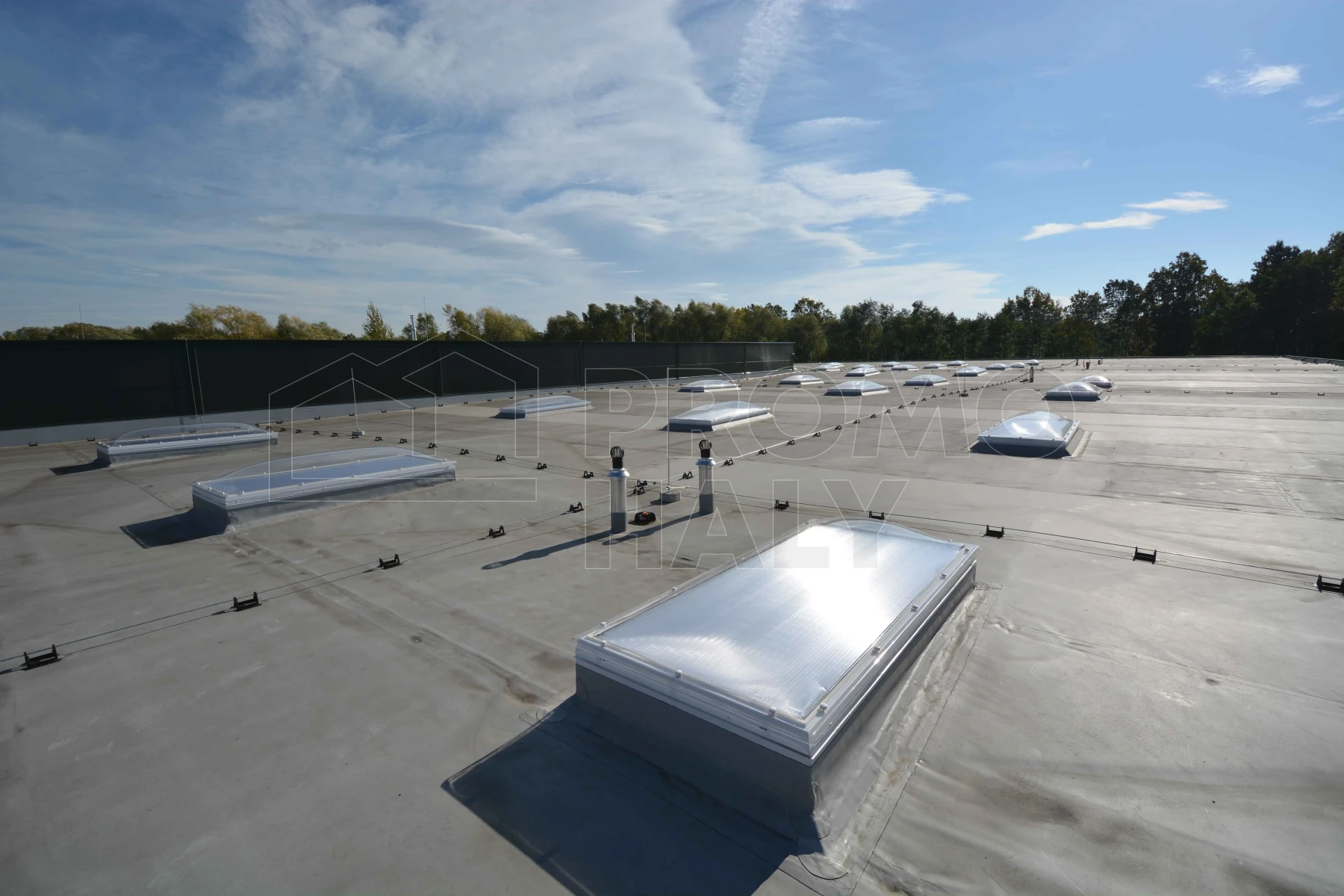
Skylights, light tubes, and daylighting
For illuminating industrial, storage, retail, or sports halls, car showrooms, and car service centers, roof skylights or light tubes are highly suitable both for providing good lighting conditions in the hall and for ventilating the hall space. Skylights mainly ensure energy savings by fully replacing artificial lighting in the hall during the day.
Basic types of skylights:
- Arched ridge skylight
- Dome skylight
- Light tubes
Most skylights can be equipped with openings that usually have various sensors. The openings mainly ensure thermal comfort in the hall or protect firefighters in case of fire.
Types of skylight controls:
- mechanical
- electrical
Electrical skylight openings can be supplemented with:
- rain and wind sensors
- safety system for heat and smoke extraction (RWA)
These wind-rain sensors automatically protect both the skylight itself from damage (strong wind) and prevent damage inside the hall in case of rain if water were to enter through the skylight opening. The safety system for heat and smoke extraction (RWA), on the other hand, protects the interior in case of fire by lowering the temperature inside during a fire and extracting fumes outside the hall.
Advantages of skylights, light tubes, and daylighting:
- energy savings compared to artificial lighting
- ventilation of spaces – savings compared to forced ventilation
- natural light – better working conditions for employees
- in summer, skylights can be covered with special tarpaulins to prevent the hall from overheating
- it is possible to illuminate any space using light tubes
- daylighting can be implemented in offices where there are no windows (kitchens, toilets, meeting rooms)
- helps reduce temperature and extract fumes outside the building in case of fire
Disadvantages:
- greater heat loss than with roof insulation (panels, built-up roofs)
- higher risk of water leakage into the hall
.webp)