Steel halls and their structures
The supporting part of each of our steel halls is formed by a steel structure. These structures are used in an ever-wider range of industries and are applied to an increasing variety of products.
Overview of steel structures in our steel halls:
- Frame steel structures
- Truss steel structures
- Arch steel structures
- Steel terrace structures
- Steel structure production
- Steel staircase structures
Main advantages of steel halls
The basic element of prefabricated halls is steel, which, thanks to its properties, especially its strength, provides stability even for halls with large spans as well as for highly loaded halls. The steel used for the production of our structures excels in high quality and, of course, a higher strength class.
A typical feature of steel structures is their low weight and adaptability, which lies in the possibility of future expansion, extension, or elevation. Other undeniable advantages of steel structures include their quick assembly, long lifespan, a vast number of functional as well as aesthetic solutions, the associated easy combination with different types of materials, their strength, stability, and, increasingly emphasized today, the issue of environmental friendliness – that is, their recyclability. Last but not least, we must not forget the economic aspect of steel structures and the possibility of high fire resistance.
Steel structures are always individually designed according to the client's needs. Thanks to their already mentioned variability, they can be supplied in any length, width, or height, and even after completion, they can continue to be modified.
Assembly of steel halls
We supply the steel structure as a standalone product, as part of a prefabricated hall, or as a general construction delivery including securing building permits, substructure, and all other necessary trades.
All our steel structures are structurally designed and manufactured in accordance with the relevant standards (production – according to ČSN 732610 group B, welds EN 25817 group C, dimensional control according to ČSN 732611). When calculating, it is also standard to take into account snow and wind load zones.
The supporting structure is made from materials of class S235 and S355 with certificate 2.2 or 3.1, welded and shot-blasted to grade Sa 2.5. The entire structure is then painted with a synthetic or fire-resistant coating according to the client's requirements.
Price of steel halls
The price of a steel hall is mainly influenced by the investor's specifications. A detailed price of the hall according to the visualization can be found in the Price list of halls.
Steel halls and frame-type structures
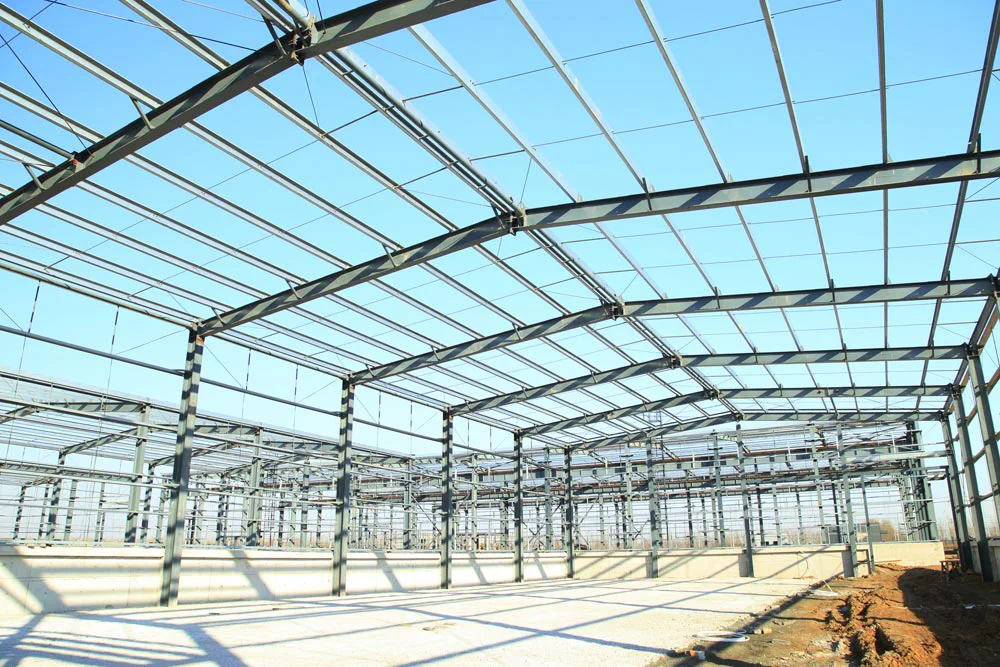
The composition of a frame steel structure consists of supporting frames, steel roof purlins, and auxiliary structures for gates, windows, and doors. Steel purlins of the METSEC system are then mounted onto these frames. The distance between individual frames of the structure forms so-called modules, ranging from 5 to 6 meters, which contributes both to financial savings and opens up the possibility of extending the hall in the future. Other undeniable advantages of the frame steel structure include a large clear height, efficient use of space, and adaptation to any business sector.
Steel halls and truss-type structures
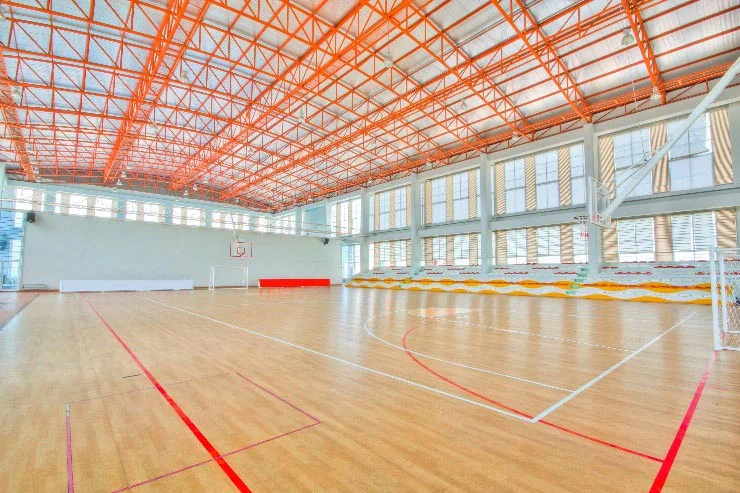
This type of structure is assembled from steel truss frames welded from tubular profiles. The frames are connected to columns anchored to the foundation by means of bolts. The interconnection between the roof and longitudinal frames is ensured by a bracing system.
Steel halls and arch-type structures

Steel structure of the arch type is made of galvanized steel, and the individual parts of this structure are connected by stainless steel fasteners. One of the advantages of the arch-type structure is its lower weight. This significantly reduces the costs of the construction part of the hall, as it is not necessary to concrete extensive footings or strips for this type of structure. It is anchored to the foundations using steel anchors.
Prefabricated halls, shelters, supporting structures
Note on prefabricated halls – the basic element is steel.
Fire protection of steel halls
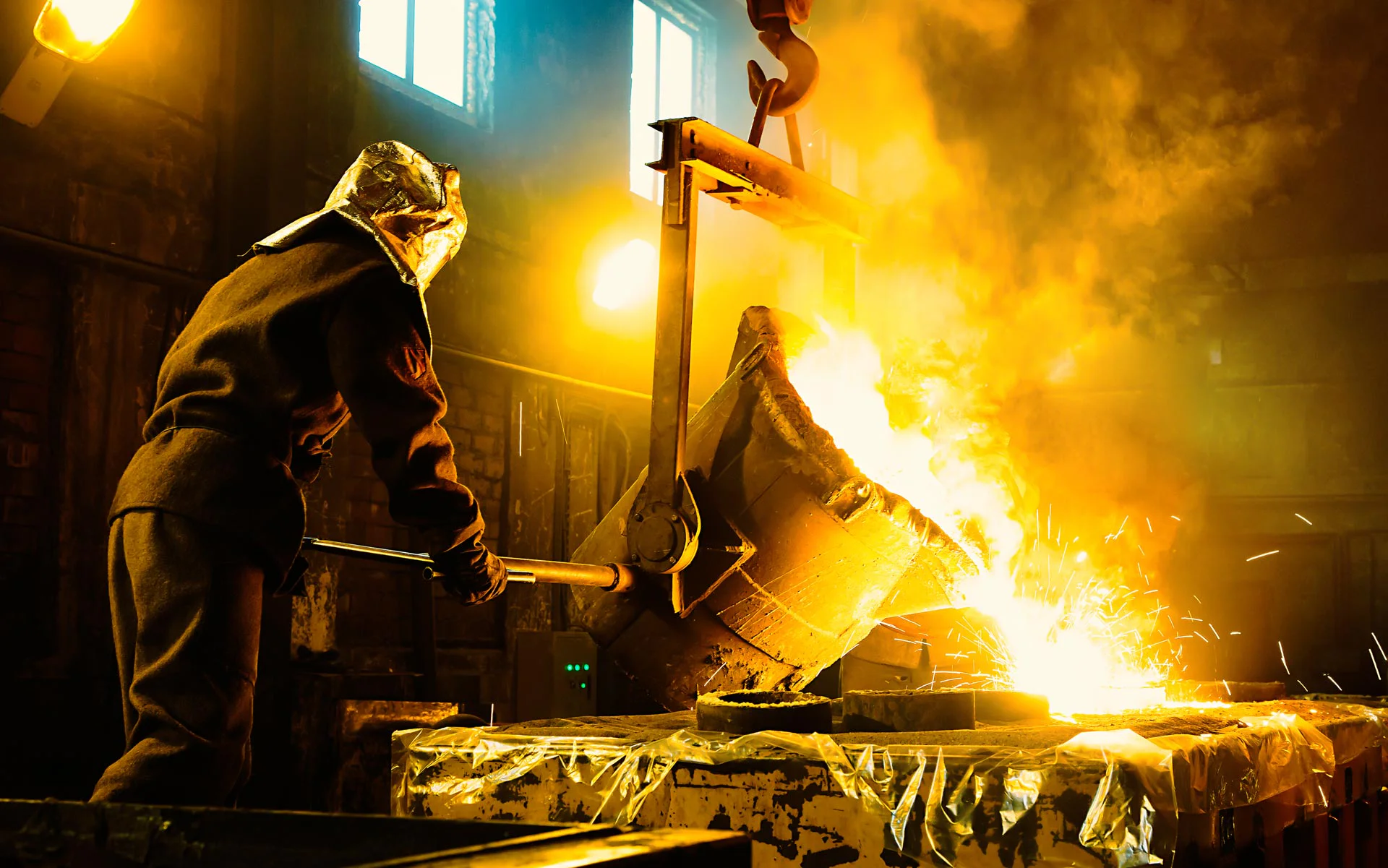
Steel is still a modern construction material with extensive application possibilities in a large number of industries. However, one of the few disadvantages of steel is its fire resistance. Even though steel is known as a non-combustible material, the fire resistance of steel structures themselves is very low. This undesirable but characteristic property is attributed to the almost immediate heating of unprotected profiles in the event of exposure to high temperatures during a fire. This leads to deformation and loss of the mechanical properties of steel – steel loses its stability and load-bearing capacity.
The fire resistance of steel structures, in terms of building fire safety, is characterized by the limit state of load-bearing capacity – R and the time (t) for which this attribute must be maintained. It is therefore the period during which the steel structure is able to withstand the effects of flame and high temperatures.
Steel structures are classified by fire resistance as follows:
- Steel structures without fire resistance
- With fire resistance of 15 minutes
- With fire resistance of 30 minutes
If the requirements are higher than 15 minutes (R15), it is necessary to protect the steel structure against fire. There are a number of ways to increase the fire resistance of a steel structure:
- Protection of the surface of steel profiles
- Intumescent coatings
- Fire-resistant coatings
- Cladding with board materials
- Encasing in concrete, brickwork
- Special plasters
- Increasing the static reserve of the structure
- Filling hollow profiles with concrete
- Cooling of steel hollow profiles
- Fire-resistant suspended ceilings
In the case of properly chosen fire protection of the steel structure, increased fire resistance of the steel structure is ensured, as well as external protection of the structure's surface. To achieve the correct effects of fire protection, it is also important to focus on the corrosion protection of the steel structure so that it matches its expected lifespan.
To determine the actual fire resistance of a steel structure and what type of subsequent protection to choose, the design of the structure according to Eurocode EN – 1993 is used. The required fire resistance of the steel structure is then determined based on the project documentation, which also includes the so-called fire safety solution of the building.
Source:
old.konstrukce.cz
www.izolace-info.cz
Our company focuses on increasing the fire resistance of steel structures through fire-resistant coatings and cladding with mineral sandwich panels.
Fire safety solution of the building
As already mentioned above, the fire safety solution of the building is an integral part of the project documentation. This very extensive document can only be prepared by a person with the appropriate authorization and must contain detailed descriptions of fire protection measures.
Each fire safety solution of a building depends on the size and scope of the building, which may appropriately affect the content of this document – it may be expanded or, on the contrary, reduced. The primary requirements include:
- A list of the documents used in the preparation of the design
- A brief description of the hall (structure, dimensions, purpose, location, etc.)
- Division of the building into fire sections
- Definition of fire and economic risks
- Assessment of the resistance of the structure and fire closures against fire
- Assessment of building materials used on the construction site in terms of reaction to fire, combustibility, toxicity, etc.
- Assessment of the potential for fire intervention
- Determination of safe separation distances
- Determination of the method of ensuring the supply of fire water
- Determination of intervention routes and equipment needed in the event of a fire intervention
- Specification of fire protection equipment (fire extinguishers, fire equipment, etc.), their number and placement
- Evaluation of the technical equipment of the hall (sewage, heating, air conditioning, etc.) in terms of fire safety
- Specification of requirements for increasing the fire resistance of steel structures or for reducing the combustibility of building materials
- Determination of requirements for fire equipment, their placement and installation in the hall
- Determination of the scope and placement of safety signage and labels
References of steel halls
 Administrative Glass Hall X Shift Chropyně
Investor: X Shift Gearboxes s. r. o.
Place of implementation: Chropyně
Hall type: Administrative
Dimensions: 12 × 17 × 7 m
 Sports Hall Chropyně
Investor: Sport Construction
Place of implementation: Chropyně
Hall type: Sports
Dimensions: 44 × 44 × 10 m
 Athletic Tunnel TJ Spartak Třebíč
Investor: TJ Spartak Třebíč
Place of implementation: Třebíč
Hall type: Sports
Dimensions: 15 × 114 × 9 m
 Administrative and Sales Hall FOXEL Elektro Ostrava
Investor: FOXEL Elektro s. r. o.
Place of implementation: Ostrava
Hall type: Administrative, retail
Dimensions: 25 × 35 × 8 m
 Danny Cars Březnice Car Showroom
Investor: Danny Cars s. r. o.
Place of implementation: Březnice u Zlína
Hall type: Retail
Dimensions: 15 × 30 × 4 m
 Administrative Sales Hall Přerov
Investor: PSS přerovská stavební a. s.
Place of implementation: Přerov
Hall type: Administrative, retail
Dimensions: 10 × 30 × 5 m
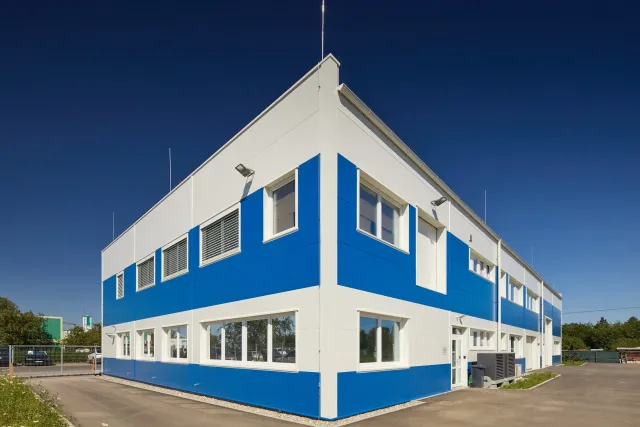 Production Hall 22 ALTECH Uherské Hradiště
Investor: ALTECH, spol. s r.o.
Place of implementation: Uherské Hradiště
Hall type: Manufacturing
Dimensions: 20 × 40 × 9 m
 Agricultural Machinery Service Hall Hůry
Investor: Jiří Borovka
Place of implementation: Hůry u Českých Budějovic
Hall type: Car showroom or service
Dimensions: 15 × 30 × 5 m
 Service and Sales Hall of Agricultural Machinery Borovka Hůry
Investor: Jiří Borovka
Place of implementation: Hůry u Českých Budějovic
Hall type: Car showroom or service, retail
Dimensions: 16 × 36 × 7 m
 Service hall for buses and trucks ČSAD Přerov
Investor: ČSAD Ostrava a. s.
Place of implementation: Přerov
Hall type: Car showroom or service
Dimensions: 22 × 24 × 8 m
 Administrative Sales Hall Stilparkett Přerov
Investor: Stilparkett s. r. o.
Place of implementation: Přerov
Hall type: Retail
Dimensions: 12 × 22 × 7 m

Investor: Růžička promotion s. r. o.
Place of implementation: Malesice u Plzně
Hall type: Warehouse, administrative
Dimensions: 12 × 56 × 6 m
Steel Hall Prices
A PROMO 1800 type hall – dimensions 30 × 60 m, height 9 m at the parapet (1800 m2 or 14,400 m3) is designed for maximum use of storage space. The price corresponds to the visualization.
A PROMO 1650 hall – dimensions 30 × 55 m, height 7.8 m at the parapet (1650 m2 or 11,500 m3) – is designed for maximum use of storage space. The price corresponds to the visualization.
A PROMO 1242 type hall – dimensions 25 × 35 m, height 7.7 m (1,242 m2 or 3,726 m3) – is designed for maximum utilization of the hall space and according to the investor’s requirements. The price corresponds to the visualization.
A PROMO 1080 type hall – dimensions 20 × 54 m, height 4.77 m (1080 m2 or 5000 m3) is an excellent size for a prefabricated warehouse hall for business, ideal for shelving. The price corresponds to the visualization.
PROMO 864 type hall – dimensions 18 × 48 m, height 5.5 and 7.7 m (854 m2 or 5,227 m3) is the basic size for administrative and production halls. The price corresponds to the visualization.
PROMO 840 type hall – dimensions 20 × 42 m, height 7 m (840 m2 or 5880 m3) is the basic size for storage halls; the hall is used for storing bulk commodities. The price corresponds to the visualization.
PROMO 756 type hall – dimensions 18 × 42 m, height 6 m (756 m2 or 7,158 m3) is the basic size for production halls and the hall can be equipped with an overhead crane. The price corresponds to the visualization without JD.
A PROMO 540 type hall – dimensions 15 × 36 m, height 5.0 m (540 m2 or 2,700 m3) is the basic size for a production or storage hall for business purposes. It can be extended on request to include an overhead crane. The price corresponds to the visualization.
PROMO 288 type hall – dimensions 12 × 24 m, height 4.3 m (288 m2 or 1,210 m3) is the basic size for an affordable production or storage hall for small businesses. The price corresponds to the visualization.
submit a non-binding inquiryConfigure the hall


