Subsidies 2026 · OP TAK · National Sports Agency · Photovoltaics · Energy Savings · Production and Sports Halls
Published: 22.7.2026 | Author: expert in prefabricated steel halls and hall structures | Reading time: 10 minutes
Subsidy for a prefabricated hall? Yes and no
One of the most common questions from investors is whether it is possible to obtain a subsidy directly for the construction of a prefabricated hall. The answer is not entirely simple. In most cases, subsidy programs do not support the hall itself as a building, but rather the purpose it will serve. In other words – you usually won’t get a subsidy for a “prefabricated hall” as such, but for example for sports infrastructure, energy-efficient operation, a photovoltaic power plant, expansion of production capacities, or an agricultural project. That’s why it’s important to address subsidy options already at the design stage. A properly prepared project can meet the conditions of the subsidy call and significantly increase the chances of obtaining support.
Which subsidy programs are the most interesting in 2026?
OP TAK – support for business projects
The Operational Programme Technology and Applications for Competitiveness (OP TAK) is one of the most important subsidy tools for entrepreneurs. Support is mainly directed to the following areas:
- energy savings,
- photovoltaic systems,
- production modernization,
- automation and digitalization,
- technological innovations.
If a prefabricated hall is part of an investment project, in some cases part of the construction work related to the implementation of the project may also be an eligible expense.
Subsidies for sports halls
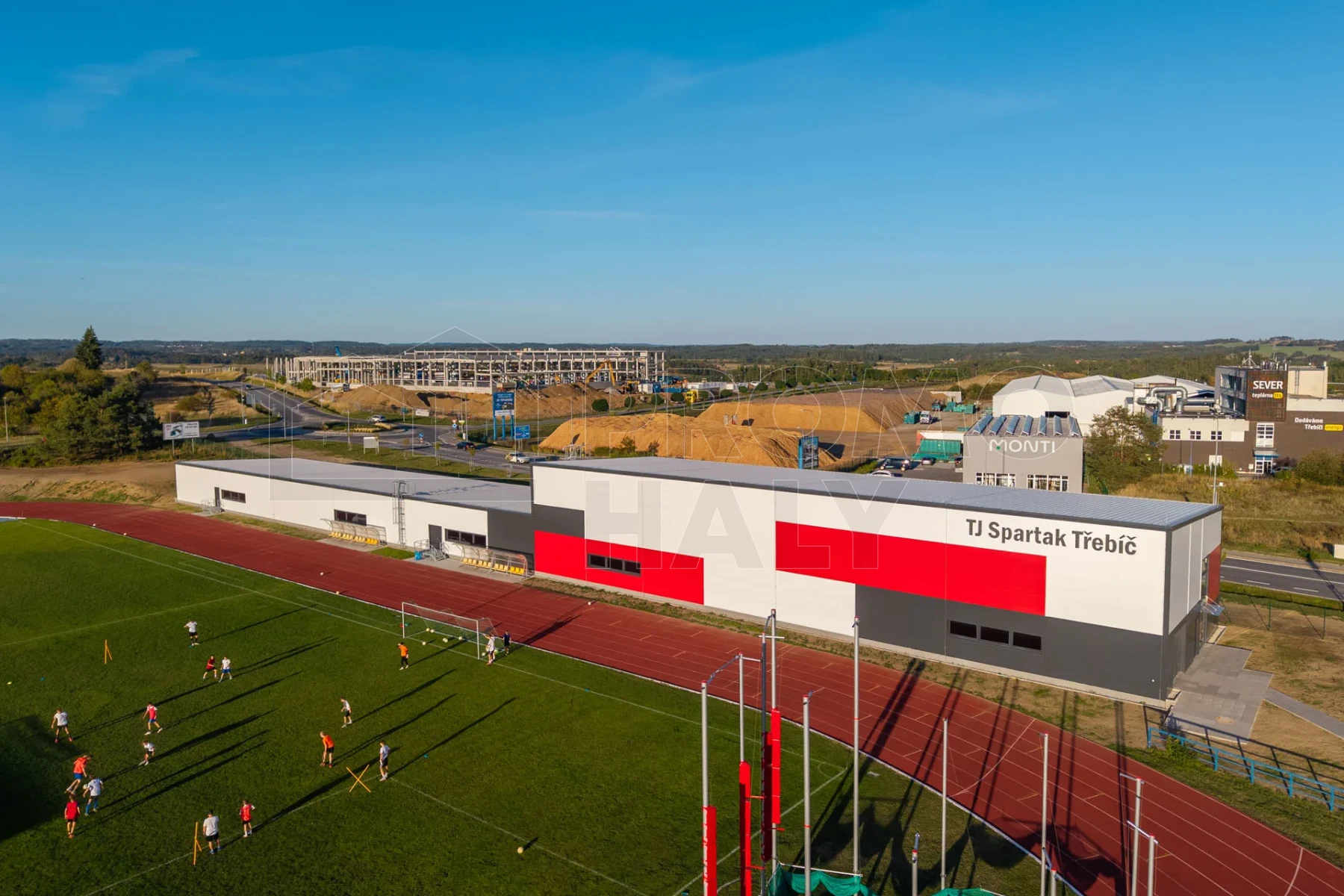
An important source of support is the National Sports Agency (NSA), which regularly announces calls focused on the construction and modernization of sports infrastructure. Supported projects include, for example:
- multifunctional sports halls,
- halls for indoor ball sports,
- tennis halls,
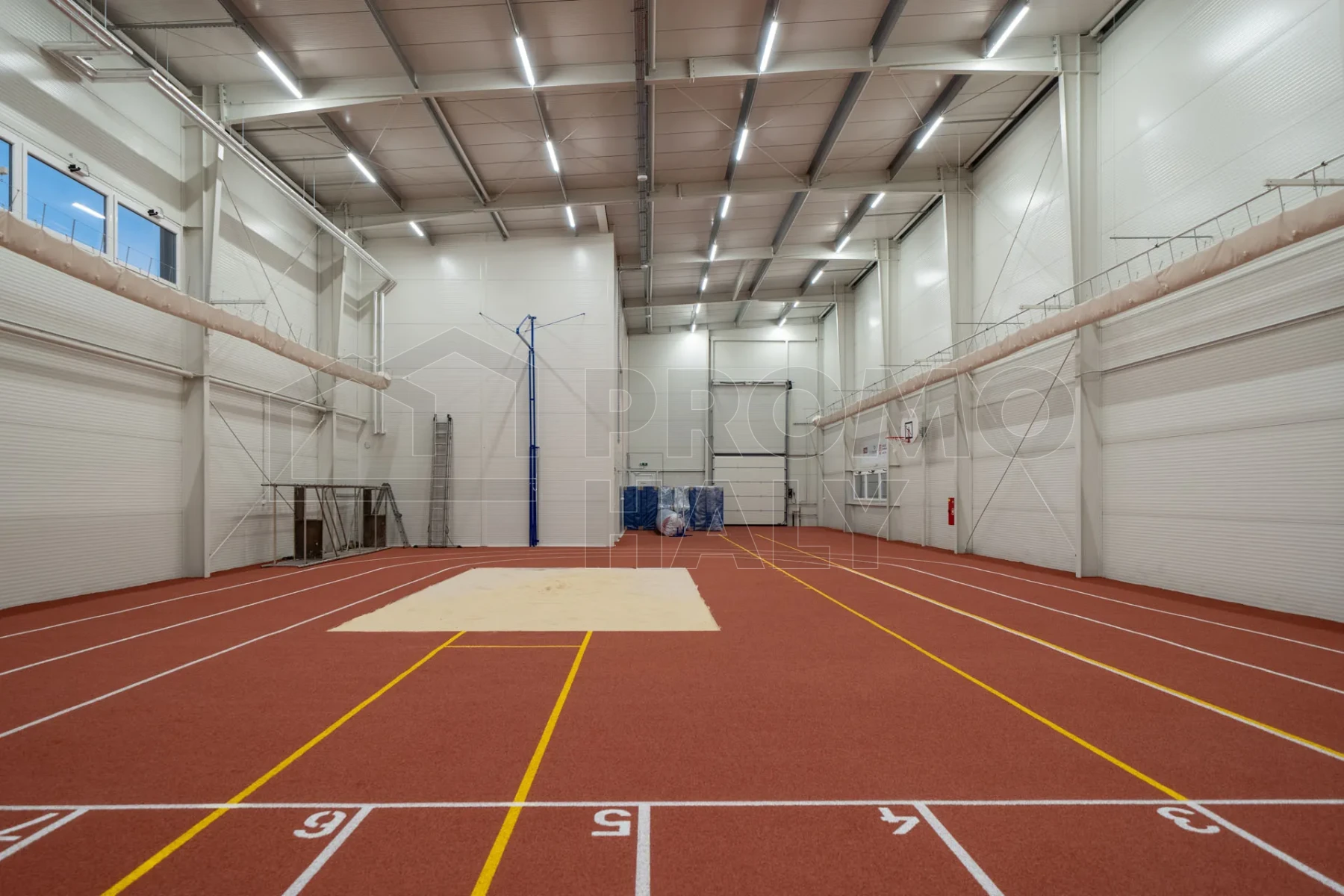
- athletics halls,
- ice rinks.
In these projects, a prefabricated steel hall is often the most efficient structural solution thanks to fast construction and favorable investment costs.
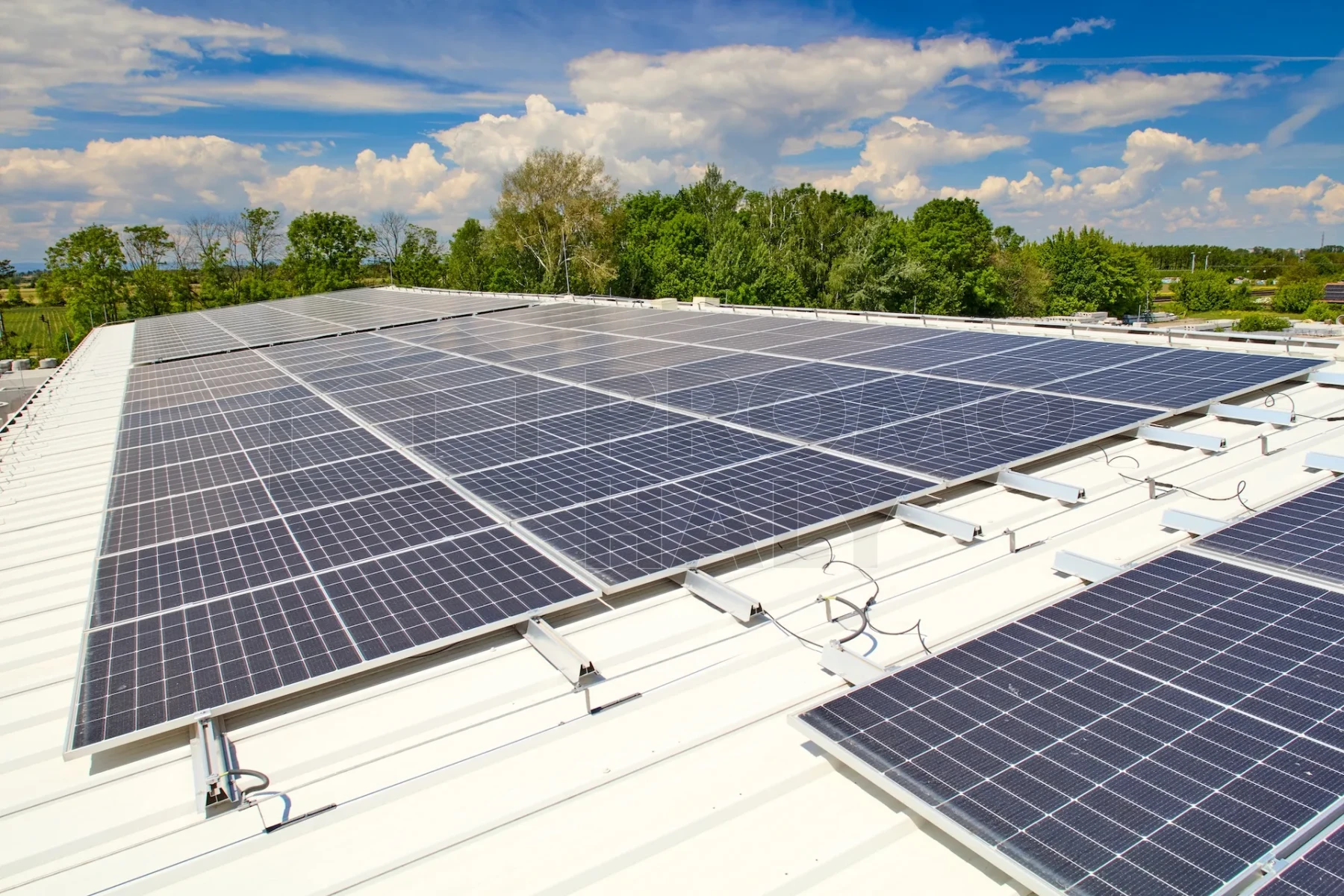
Photovoltaics on the hall roof
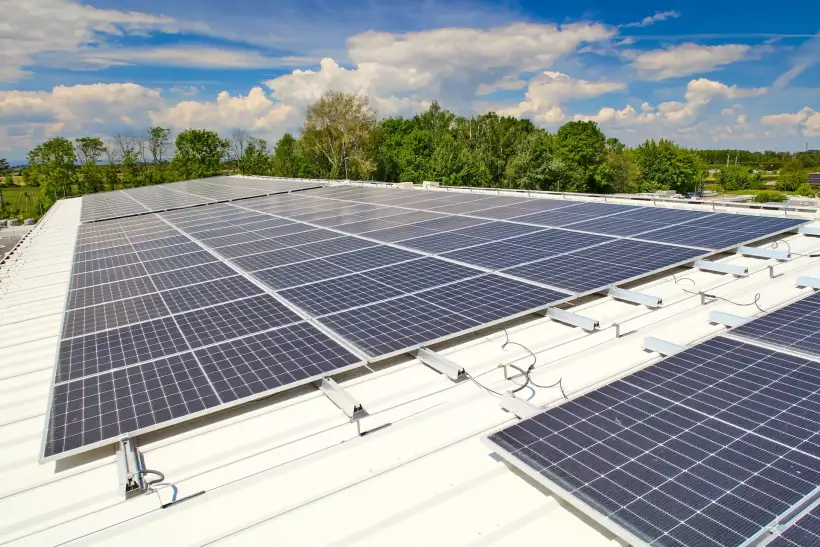
One of the most common subsidy areas in recent years is the installation of photovoltaic power plants. Industrial and warehouse halls are ideal for photovoltaics thanks to:
- large roof areas,
- high own energy consumption,
- the possibility of combining with battery systems.
When designing a new hall, it is therefore advisable to take into account the future load of the roof with photovoltaic panels in advance.
For which types of prefabricated halls is support most often available?
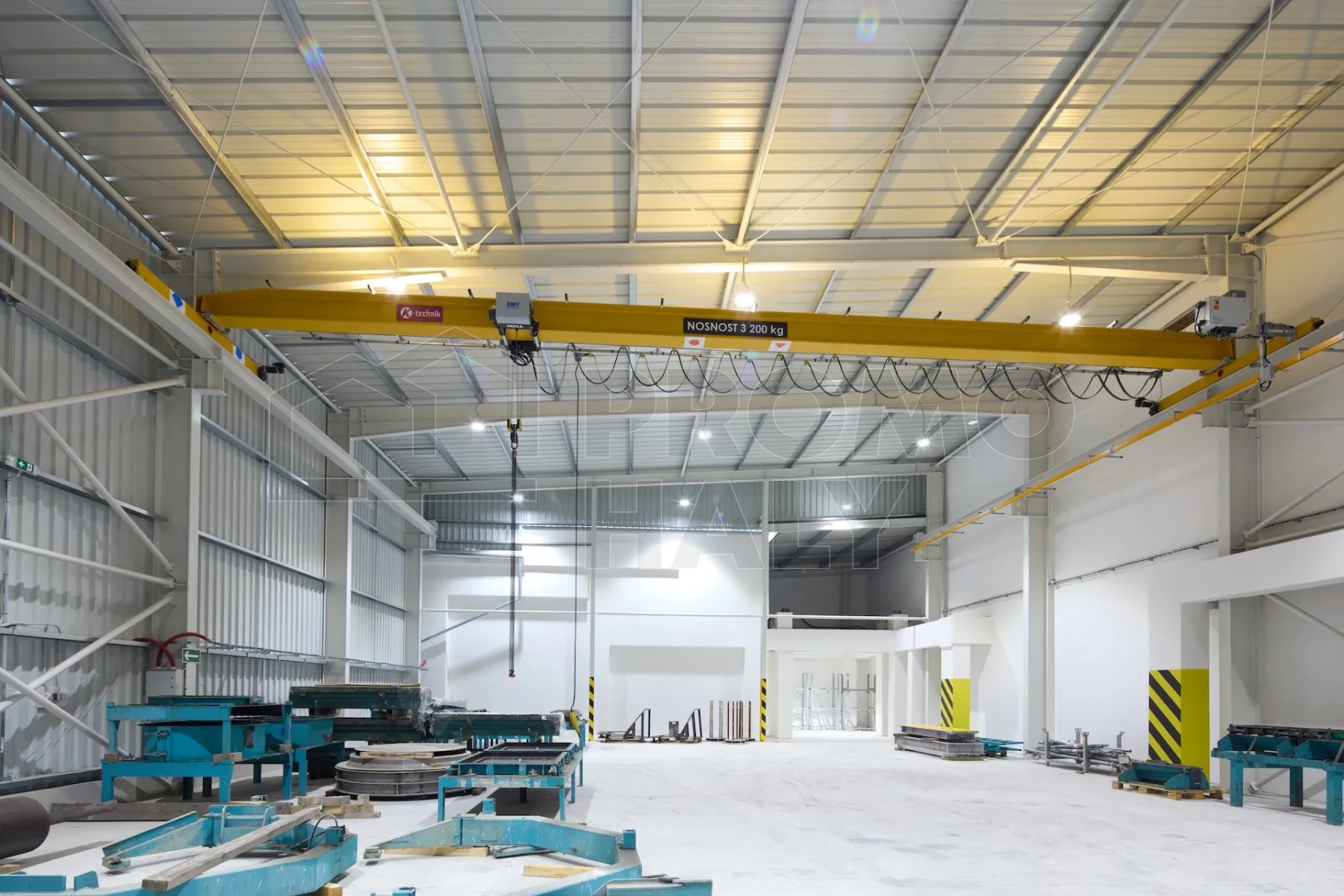
- Production halls
Production halls are mainly supported indirectly through programs focused on:
- business development,
- production modernization,
- energy savings,
- introduction of new technologies.
The subsidy usually applies to the entire investment project, which may also include a new prefabricated hall.
- Sports halls
Sports infrastructure is one of the areas where significant support can be obtained for construction. Most often, these are:
- sports halls for schools,
- municipal sports centers,
- tennis halls,
- multifunctional sports facilities.
The amount of support and conditions vary depending on the specific call.
- Agricultural halls
In agriculture, projects focused for example on:
- storage of production,
- livestock breeding,
- modernization of agricultural operations,
- technological equipment.
The conditions depend on the current programs of the Ministry of Agriculture and the State Agricultural Intervention Fund.
The most common mistakes when applying for a subsidy
Practice shows that many investors start addressing subsidy options only when the project documentation is almost finished. This is a problem. Many subsidy calls set specific requirements, for example for:
- building energy performance,
- installation of renewable energy sources,
- technology parameters,
- the way the building is used,
- implementation schedule.
Subsequent project modifications can then mean unnecessary costs and time delays.
Why address subsidies already at the hall design stage?
A modern prefabricated hall is not just a building. It is increasingly becoming part of a comprehensive investment project, where energy efficiency, photovoltaics, production technology, and future operating costs play a role.
If the investor takes subsidy conditions into account already at the design stage, it is possible to optimize:
- structural solution,
- energy performance,
- preparation for photovoltaics,
- future operating costs,
- the overall investment economics.
It is at this stage that there is the greatest potential for financial savings.
Where to find current subsidy calls?
Subsidy conditions change regularly and individual programs have limited application deadlines. It is advisable to follow up-to-date information on official portals:
Program | Official source |
|---|---|
| OP TAK | https://www.optak.gov.cz |
| National Sports Agency | https://nsa.gov.cz |
| Ministry of Industry and Trade | https://www.mpo.gov.cz |
| State Agricultural Intervention Fund | https://www.szif.cz |
| Modernization Fund | https://www.modernizacnifond.cz |
Conclusion
The prefabricated hall itself is in most cases not the subject of a subsidy. Support usually applies to the purpose of the project – for example, production, sports infrastructure, energy savings, or installation of photovoltaics.
That’s why it’s important to consider subsidy options already at the design stage. A properly prepared project can significantly increase the chances of obtaining support and at the same time optimize long-term operating costs.
Frequently Asked Questions (FAQ)
Is it possible to get a subsidy directly for a prefabricated hall?
In most cases, no. Subsidies are provided for the specific purpose of the project, which may include the construction of a hall.
For which types of halls is support most often available?
Most often for production halls, sports halls, agricultural facilities, and projects related to energy savings.
Can I get a subsidy for photovoltaics on the hall roof?
Yes. Photovoltaic systems are among the most frequently supported investments within both business and public projects.
When should I start addressing subsidy options?
Ideally already at the hall design stage. Many subsidy programs include technical and energy requirements that can affect the project itself.
Where can I find current subsidy calls?
On the official portals of OP TAK, the National Sports Agency, the Ministry of Industry and Trade, SZIF, or the Modernization Fund.
_kopie.webp)


