Speed of Construction of Prefabricated Production Halls
Despite unexpected influences on the economy of the prefabricated hall sector in recent years, the number of completed projects remains high. The demands of society for a wide range of products have brought with them the need to increase storage capacities in manufacturing companies to reflect the increased demand in the sector. This situation leads not only manufacturing companies to invest in expanding their production or storage spaces, where one of the most advantageous solutions is prefabricated halls. The advantage of these halls is their variability and adaptability to the investor’s requirements. Production and industrial halls of this type are designed as single-storey, two-storey, with built-in or attached structures. Of course, when constructing production halls, they are equipped with everything necessary for their purpose – overhead cranes of various capacities, different lifting platforms, or rotating mechanisms and hoists. For the functionality of the buildings, it is also essential not to forget about their insulation and natural daylighting. Fire resistance is also emphasized.
Main Advantages of Prefabricated Production Halls:
- Speed of construction and the associated cost compared to traditional masonry buildings
- Layout flexibility – built-in structures, extensions, and floors
- Integration of various types of lifting equipment directly into the hall structure
- Excellent thermal properties of the buildings with low operating costs
- Easy maintenance
- Low foundation costs compared to traditional buildings
The speed of construction of production halls is one of the greatest benefits from the investor’s perspective. The time saved on construction is also reflected in the price of the hall, which is usually lower compared to masonry buildings.
Competitive Advantages:
- Foundations
- Structure
- Cladding
Foundations of Industrial Halls
The foundations vary according to geological conditions. In simpler cases, they are solved quickly and easily with footings; in more challenging geological conditions, bored piles are used, which include pile heads or footings. The footings are supplemented with strips, and the hall area itself is leveled with crushed aggregate of various fractions or crushed concrete. The structure of the production hall is anchored during assembly using chemical anchors to the concrete footings. If the hall includes overhead cranes, the columns must be fixed, ideally through sockets. The floors in production halls are also solved simply. On the prepared and leveled surface, geotextile is laid, onto which waterproofing membrane is welded. In the final phase, the final floor made of steel fiber-reinforced concrete is finished with a cement-based hardener, which gives the floor abrasion resistance. The floor can also be finished with an epoxy coating. This simple foundation solution has a significant impact on the speed of construction and, of course, on the final price of the project.
Structure of Production Halls
The structure is adapted to the requirements of the production processes. With an emphasis on economic use of space, the structure is often used for additional elements of the hall, such as overhead cranes, which it supports directly, thus minimizing the use of additional columns in the production halls. The height of production halls and structures is very flexible. The type of structure is often chosen according to the width and height of the hall or overhead crane, or according to the foundation in complex geotechnical conditions at the construction site. The structure may include steel crane runways of various capacities – from 1 ton up to 25 tons or more. Production halls are often multi-nave, with each production section having its own overhead crane or a combination of several cranes on one crane runway.
Cladding of Production and Industrial Halls
Cladding can be solved in many ways. Among the most basic elements are the roof pitch, hall width, fire resistance, and many other attributes, which subsequently determine the use of individual materials. Most often, the ratio of price to thermal properties in combination with fire resistance is decisive.
The walls of the hall are most often clad with classic sandwich panels with mineral wool or PIR core of various thicknesses. Prefabricated sandwich panels, which are self-supporting and are installed horizontally from column to column or vertically using steel purlins, have a significant impact on the speed and simplicity of hall assembly. The final appearance and functionality of the cladding of a prefabricated production hall is completed by adding sheet metal elements. In some cases, built-up cladding can be used on the walls, which requires several steps – C-cassettes, thermal insulation, and trapezoidal sheet metal.
For the roof, two types of cladding are most commonly chosen:
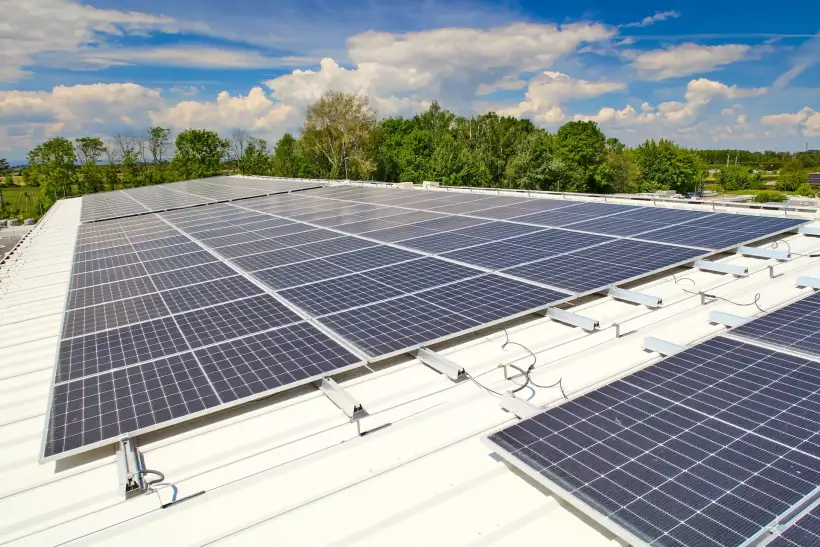
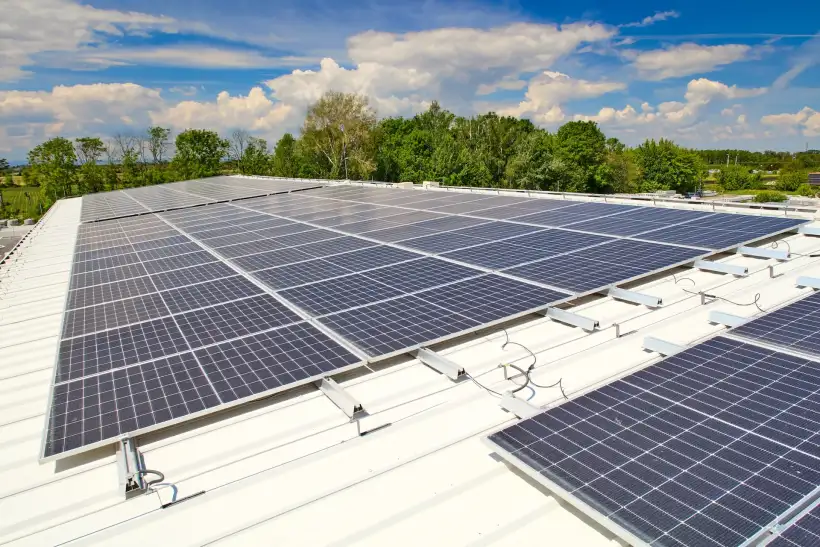
- Sandwich panel on the roof with a pitch >5° with PIR foam or mineral wool core
- Built-up cladding with membrane with a pitch <5°, in combination or separately – mineral wool and EPS polystyrene
All the described types of elements for prefabricated production halls can be implemented by PROMO HALY s.r.o.
The photos show a hall with a mezzanine in Uherské Hradiště, where the construction was completed within 5 months from piling to pouring the floors in the hall.


_kopie.webp)


