Trends in Warehouse Construction
In recent years, the demand for prefabricated storage halls has increased significantly. There are several reasons for this. Prefabricated warehouse halls are, thanks to the simplicity of their structural design and speed of construction, an ideal solution for investors looking for a quick fix to their insufficient storage capacity problem at the lowest possible cost.
Every investor expects:
- high-quality construction,
- good thermal insulation properties,
- long service life, and
- adequate fire resistance.
Prefabricated halls offer all of this. At the same time, they require almost no maintenance.
Structure of Warehouse Halls
Warehouse halls are most often built with a classic frame structure (steel or concrete) without a central support, which ensures their high practicality. If a large span of the hall frame is required, i.e. over 25m, this can be achieved with a truss frame structure or a central support. Different dimensions can be achieved with concrete structures. The load-bearing steel structures consist of IPE profiles, which are connected in the roof part by purlins, onto which the roof cladding is then laid. Concrete structures are fixed, and the upper beam is freely placed on concrete columns.
The structure of warehouse halls is adapted for practicality and warehouse management.
Insulation in Warehouse Construction
Hall insulation can be either from sandwich panels with IPN or mineral core, or in combination with a layered roof cladding with membrane. The IPN core ensures good thermal insulation properties of the hall, the mineral core provides higher fire resistance and better sound insulation. In the case of choosing a non-insulated hall, trapezoidal sheet metal is used for cladding and the wall structure is supplemented with girts. By choosing the right material and type of hall cladding, the hall is efficiently adapted to its purpose and can be used to store both flammable and non-flammable materials.
Dimensions of Warehouse Halls
The length of a warehouse hall is practically unlimited and depends only on the wishes of the investor or the size of the plot. The total length of the hall is divided into individual frame modules, which most often range from 5 to 6 meters. Sufficient lighting of warehouse halls is a matter of course. One possible option is to use plastic windows around the perimeter of the hall; in the case of a non-insulated hall, fiberglass light strips can be used for illumination.
Racks as the Ideal Addition to a Warehouse Hall
Prefabricated warehouse halls are the ideal solution for pallet and rack storage. They ensure efficient and effective storage of goods, raw materials, and materials with maximum space utilization. If the hall is designed as a pallet warehouse, where pallets are mainly placed along the walls of the hall or form aisles, a better option is a arched roof skylight, which can also be opened to regulate the temperature in the hall. A useful helper in this case is an electronic sensor that monitors stronger wind gusts or rain showers and automatically closes the skylight in case of sudden weather changes. The height of the hall itself is practically unlimited for standard storage. The warehouse hall can also be equipped with a crane track and an overhead crane.
Warehouse Insulation
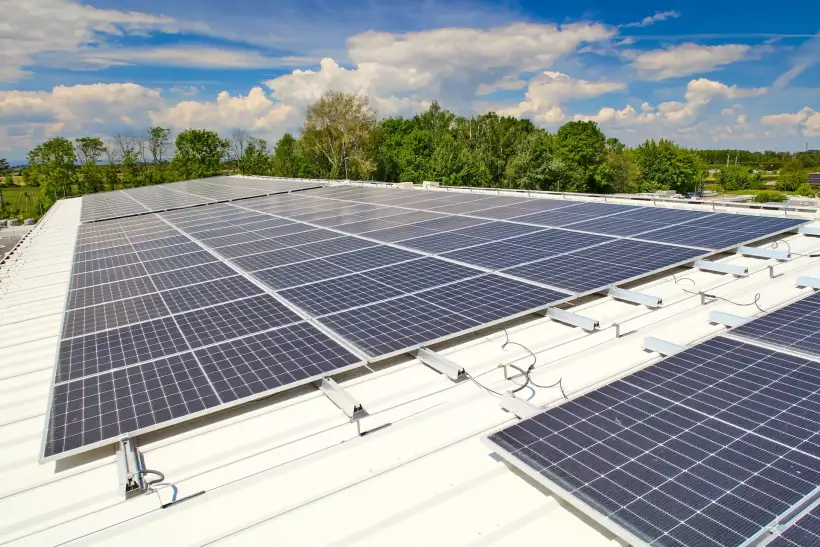
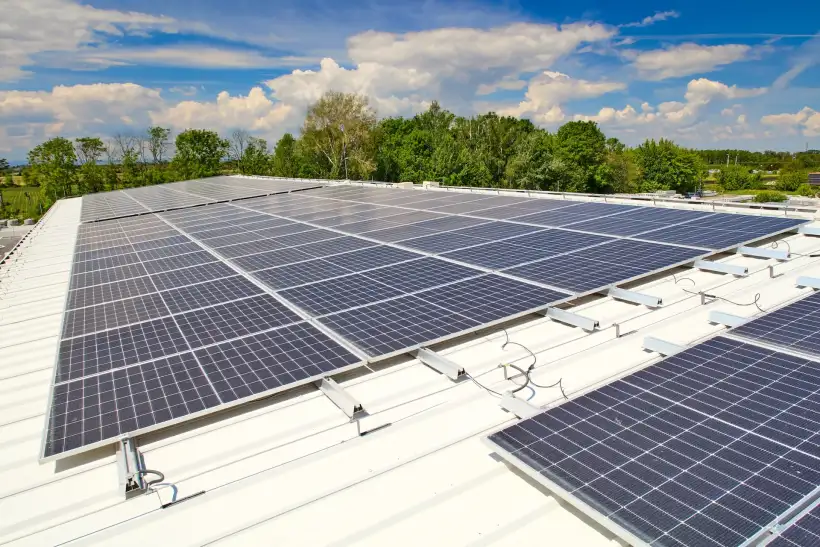
High energy prices force owners of prefabricated warehouse halls to look for savings. The previously mentioned thermal insulation properties of sandwich panels combined with the installation of photovoltaic panels on the roof are an ideal solution. Investment in better hall insulation and energy savings pays off very quickly in such cases.
Color Variability of Warehouse Halls
The warehouse hall itself does not have to be only functional and practical. Nowadays, you can choose from a whole palette of color designs and cladding profiles. Panels can be installed on the walls both horizontally and vertically, achieving originality for each individual building. The color variety of sheet metal elements, roof and corner trims, or around doors and windows, allows you to individualize the building or, on the contrary, adapt it to its surroundings.
Price of a Prefabricated Warehouse Hall
If you are deciding to build a warehouse, a prefabricated hall is the ideal choice for your business plan. Halls offer the best price per m3. You can compare the prices of individual halls in the hall price list.


_kopie.webp)


