Factors Influencing the Price of Prefabricated Halls
In the past decade, we have seen an increased demand for the construction of prefabricated halls. This was due to economic growth, industrial development, and an overall favorable market situation. During the Covid period, the situation changed somewhat. Those interested in building halls began to consider their investment more carefully, its profitability and overall return, the speed of construction, and its flexibility, all of which are reflected in the price. These factors further emphasized the advantages of prefabricated buildings, which we are happy to demonstrate to you. However, a completely new phenomenon also emerged. All the lockdowns and restrictions led to an increased demand for storage spaces, distribution centers, and facilities for the growing number of various e-shops and logistics companies, which require a quick response and an adequate solution without compromise.
The price of a prefabricated hall depends on a number of factors that need to be considered and taken into account when designing the optimal solution right from the very beginning. That is why we approach each investor and their intention to build a prefabricated hall individually and anticipate possible pitfalls they might encounter. We act as an intermediary between the investor and the design office, passing on the investor’s requirements with an emphasis on the overall efficiency of the proposed solutions, while also considering the economic aspect. Ideally, we arrange a meeting with the investor and discuss everything thoroughly, listen to their vision for the hall and their requirements that the hall must meet. We present specific possible designs for the hall. We prepare a visualization. We assist them already in the pre-design phase.
Basic factors influencing the price of a prefabricated hall:
- Location of the construction and the plot itself
- Dimensions and height of the hall
- Purpose of the building
- Type of insulation or cladding of the hall
- Regularity of the prefabricated structure
- Design elements
- Technology
Prices for some types of halls can be found in the hall price list.
Location of the Construction and the Plot Itself
Even when purchasing the plot intended for the construction of the hall, its location plays a significant role in determining the total costs of the project. When designing the structure of the hall, it is necessary to take into account the climatic conditions in the given area and adapt the overall structural solution accordingly. The final price of the structure is most influenced by the snow zone, which in the Czech Republic is divided into 8 areas.
Construction costs of the hall consist of several parts that affect the final price. The most significant are the substructure of the hall, i.e., the foundations, various utility connections, sewage, roads, etc., and then the superstructure of the hall itself.
Dimensions and Height of the Hall
The most fundamental influence on the price of a prefabricated hall is, of course, its size. The larger the hall, the higher the price. However, the price does not increase exponentially; with larger dimensions, the price per m3 decreases. This means that a hall of 10x20m with a height of 5m costs much more per m3 than a hall of 25x50m with a height of 6m. It is important to choose the optimal height with regard to energy costs for heating. For storage halls, we definitely recommend a height of 6m and above; for other types of halls, it depends on the needs of the specific operation or store.
Purpose of the Prefabricated Hall
When designing the hall project, the purpose the hall will serve plays a role. Whether it will be a completely new standalone building or an extension of space for existing production, an increase in storage capacity, or if the hall will be intended for rental, or perhaps will serve for public amenities. The alpha and omega of the project today is the design of the fire safety solution for the hall, without which it is not possible to build the hall. This tells us which materials, considering the location and use of the hall, can be used for the cladding of the building, what the internal layout of the hall will be, and also what the fire resistance of the steel structure will be. These factors will significantly affect the final price of the hall.
Insulation and Cladding of the Hall
The type of insulation also plays a key role in the price of the hall. However, the rule that the thicker the insulation, the better the parameters, does not always apply. For example, mineral panels: for a roof mineral panel with a thickness of 120 mm, the heat transfer coefficient U = 0.34 (W/m2*K), while for a PIR sandwich panel with a thickness of 120 mm, the U-value is 0.17 (W/m2*K), i.e., twice as good thermal properties as mineral panels at almost the same price. The reason for using mineral panels is their fire resistance and combustibility and their classification in category DP1 – hardly flammable (they do not increase the intensity of fire during the required fire resistance period). On the other hand, PIR panels are classified as DP3 – they increase the intensity of fire during the required fire resistance period and do not meet the requirements for DP1 and DP2 structures. Another possible type for roofs is a built-up structure from trapezoidal sheet metal, thermal insulation, and waterproofing – membrane. Thermal insulation is made from mineral wool boards, EPS 100 polystyrene, their combination, and occasionally from PIR boards. The composition depends on the fire resistance of the structures.
Design Elements of the Hall
A separate chapter nowadays is the investor’s requirements for the overall appearance of the hall. The hall can be designed purely to fulfill its purpose in an economical variant, or it can be conceived as a significant element of the surrounding development, with an emphasis on design. The building can either blend in with its surroundings as much as possible or, on the contrary, stand out, be distinctive, and attract attention. Today’s trends tend more towards the latter of the above options. This is also facilitated by the excellent modularity of steel structures, which allows even the most demanding requirements of the future hall owner to be met. That is why PROMO HALY also emphasizes individual solutions for each building. Increased demands for the quality of materials used and tightening standards, whether in the field of thermal insulation properties or fire resistance, are leading to an ever-expanding range, especially among manufacturers of sandwich panels, who offer various surface finishes, profiling, and color options on the market.
Technologies Used in the Hall
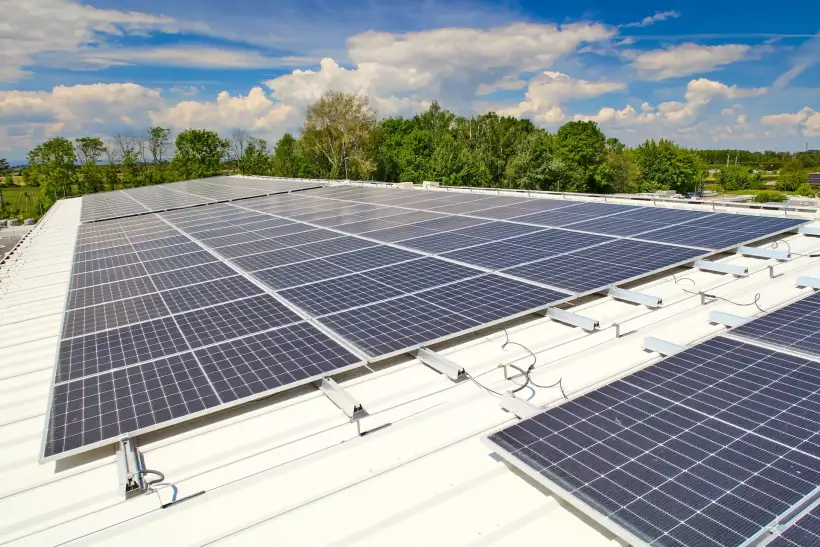
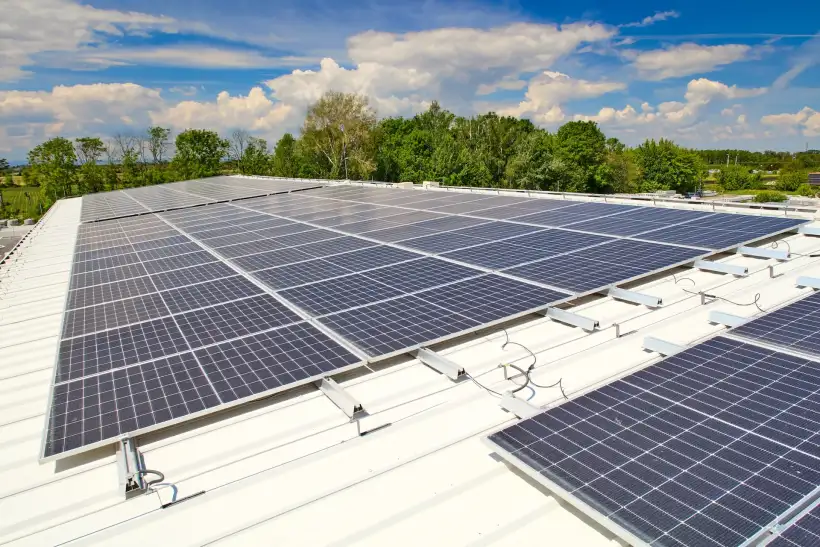
Technologies increase the price of the project, mainly overhead cranes or other lifting equipment that adds load to the primary structures. Other elements include, for example, photovoltaic panels on the roof of the hall or technologies placed in various ways on the roof or cladding of the hall. Examples include large air conditioning units, evaporators, or condensing units, etc.
Other Options for Prefabricated Halls
We are increasingly proposing the construction of combined halls to investors. This involves connecting a storage or production hall with its administrative part, which, in case of investor requirements for maximum land use, directly encourages a multi-storey variant. In such a case, due to the higher fire resistance requirements of the administrative part, this requirement is solved by an internal plasterboard lining, which also hides the hall structure and creates a pleasant office environment. At the same time, the administrative part can be made brighter, visually opened up, and connected to the surrounding environment with system glass façade elements. Various panel color options can be combined on the façade, or the administrative part can be clad with Alubond boards or otherwise enhanced with design elements.
In conclusion, it should be said that prefabricated halls are today, thanks to their advantages, an ideal solution for fast and efficient construction. They can meet even the most demanding requirements of today and offer all this at a reasonable price. So arrange a meeting with us and we will help you fulfill your vision.

_kopie.webp)


