In this window you can adjust the use of cookies according to your preferences. If you leave the default settings, only cookies that are necessary for the website to function will be allowed.
Technical cookies are essential for the functioning of the website and cannot be disabled. They are usually set in response to actions you take on the website, such as security settings, logging in and filling in forms. These cookies may be set by us or by third-party providers whose services we use on the website, and do not store any information that can be attributed to a specific person. You can set your browser to block cookies or to notify you about them. However, please note that some websites may not function properly without these cookies.
| Cookie | Description |
|---|---|
| cookies_level | Your cookie settings from this dialog |
| PHPSESSID | Session cookie that maintains the ID of the current session |
Analytical and performance cookies are used to analyze website traffic and further improve its operation. They help us understand visitors' interests and how they use our website. These cookies do not collect information that could identify you.
| Cookie | Description |
|---|---|
| _ga_VYXZPTFH6E | Cookies of the Google Analytics analytical system |
| _ga | Cookies of the Google Analytics analytical system |
| pageviewCount | Google cookies |
They are used to track visitors on websites. The intention is to display advertising that is relevant and interesting to the individual user and thus more valuable to publishers and third-party advertisers.
| Cookie | Description |
|---|---|
| _gcl_au | Cookie of the Google AdSense marketing system |
| leady_session_id | Cookie of the Leady marketing system |
Modular steel structures have gradually found their place across various types of buildings. Originally a purely industrial solution, they have expanded into the commercial sphere, warehousing, or spaces intended for services and leisure activities. Their main advantage is a clear and well-managed construction process without unnecessary delays.
The basis is the division of the building into individual parts, which are manufactured in advance and then assembled on site. This approach significantly shortens the implementation time and limits factors that could slow down the construction. Thanks to this, it is possible to better plan individual phases as well as the overall course of the project.
In addition to time savings, this system also brings economic benefits. Steel allows for precise manufacturing and is also among the materials that can be reused multiple times. The structure thus makes sense not only from the perspective of implementation, but also in terms of the long-term operation of the building. Another benefit is variability – the building can be designed for a specific purpose and, if necessary, further modified or expanded.
Technology and Operational Efficiency
Modern construction systems use advanced materials and technologies that have a direct impact on the building's operation. High-quality Facade in combination with suitable insulation helps maintain a stable indoor environment while reducing energy consumption.
For heated buildings, it is important to adapt the structure composition to the specific use. A different approach is required for a warehouse, a production hall, or an administrative section. The design must also take into account fire and safety requirements, which are based on the project documentation.
From Design to Implementation
Every project starts with a design that reflects the future operation and technical requirements. The span of the structure, layout, or possibilities for further expansion – all of this influences the final form of the building and its functionality.
After obtaining the necessary permits, the actual implementation follows. The structure is most often anchored to concrete footings, or to deep foundations in more demanding conditions. Thanks to the precise manufacturing of individual elements, assembly is fast and without unnecessary downtime.
A major advantage of steel halls is their adaptability. The structure can be designed to accommodate crane installation, the addition of extra floors, or future expansion of the building. The design thus allows for maximum use of space while maintaining flexibility for further modifications.
Sports halls represent an important part of the public infrastructure of cities and municipalities. They are not only used for organized sports, but increasingly also by schools, for leisure activities, and community events. Therefore, when planning them, it is not enough to address only the construction itself — long-term functionality, economical operation, and flexible use of space are essential.
The design of a modern industrial hall begins with the right configuration. It is a controlled process of information exchange between the investor, the designer, and the PROMO HALY team. The goal is to design a hall that makes sense operationally, technically, and economically.
A sports hall today must offer versatility, fast construction, and reasonable operating costs. That is why a prefabricated hall with a steel structure is increasingly chosen, as it allows for precise responses to the needs of sports clubs, municipalities, and schools.
Reconstruction of Halls: Insulation as a Path to Lower Costs The growing demand for production and storage spaces is increasing land prices. In addition, suitable locations around larger cities are becoming scarce, and the pressure on land use is rising. Therefore, companies are increasingly choosing not to build new facilities, but to invest in the reconstruction of existing buildings. The reconstruction of a prefabricated hall today represents a technically and economically sensible solution.
Low acquisition costs are among the main reasons why companies choose prefabricated halls. However, the price does not arise by chance. It is influenced by a combination of technical, operational, and legislative factors. Below, we describe those that have the greatest impact on the final price.
"Prefabricated halls are among the fastest-growing segments of modern construction. Thanks to their rapid assembly, cost-effectiveness, and wide range of uses, they have gained popularity across industries – from manufacturing and logistics to agriculture and sports facilities."
Sport and physical activity play an important role today not only for health, but also for community life. The growing demand for quality sports facilities brings pressure for the rapid and efficient construction of new spaces. Prefabricated sports halls are the ideal solution – they combine fast implementation, versatility, and long lifespan.
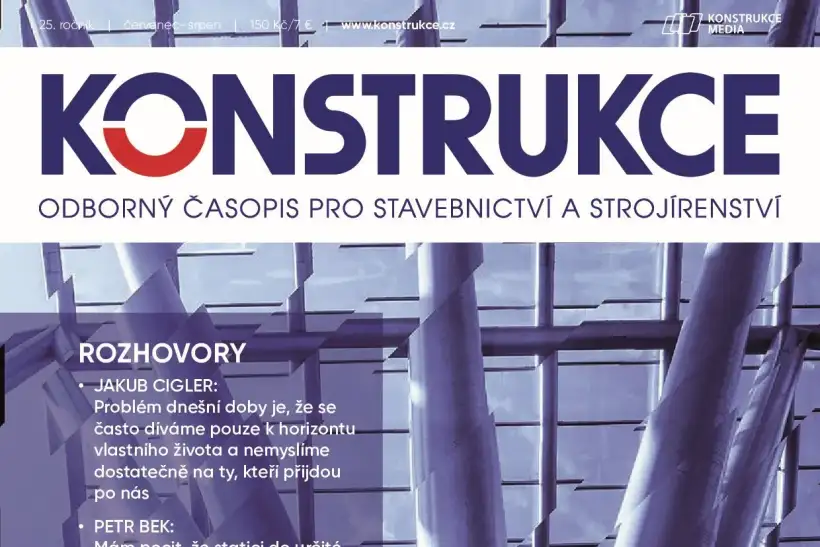
In the latest issue of the magazine Konstrukce 08/2025, an article by the company PROMO HALY s.r.o. was published. The article focuses on the construction of a modern sports hall with an athletics tunnel in Třebíč, which represents a unique project within the Vysočina region. The article presents a covered athletics tunnel with a length of almost 114 meters, providing full facilities for year-round training of athletes.


(1).webp)